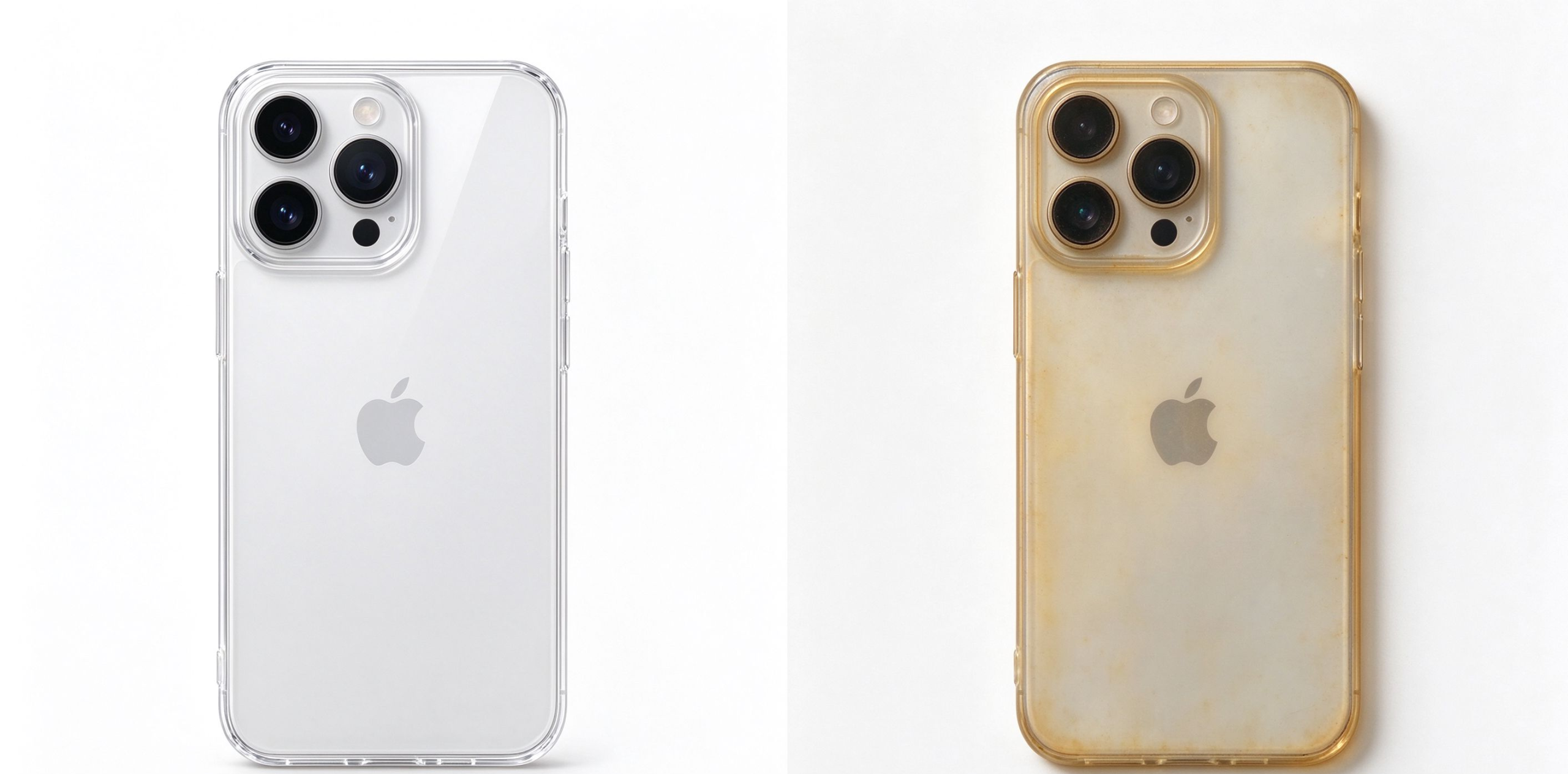
Let me tell you about the first time it happened.
I’d just unboxed a brand new phone — the sleek, expensive kind with the titanium frame I’d saved up months for. I splurged on a clear case, the fancy kind that lets the phone’s original finish shine through. I kept pulling it out of my pocket just to look at it, showing it off to my friends.
Three months later, I was sitting at a restaurant and pulled my phone out to check the time. I froze.
The case wasn’t clear anymore. It was yellow. Foggy. Almost amber. Like someone had held it over a candle flame. Like it had been sitting in a dusty garage for ten years.
I was mortified. I scrubbed it with dish soap that night. I tried alcohol wipes. I even bought a “phone case cleaning gel” off Amazon. Nothing worked.
It wasn’t dirty. The plastic itself had changed.
I had no idea why. Turns out, almost everyone who’s ever bought a clear case goes through the same thing. And it’s not your fault — it’s a chemical process that happens inside the material, not something you did wrong.
Let me break down what’s actually going on.
The #1 Reason: UV Photo-Oxidation

Most clear phone cases are made from TPU — thermoplastic polyurethane. It’s the soft, flexible plastic that absorbs shock when you drop your phone. It’s also the cheapest material for clear cases.
Here’s the problem: TPU is basically a sponge for UV light.
When sunlight hits your case, the UV photons carry enough energy to break the molecular chains inside the plastic. Think of it like pulling a Lego tower apart brick by brick — except the bricks are tiny molecules you can’t see.
Those broken fragments then react with oxygen in the air. This reaction creates new molecules called chromophores — fancy word for “tiny things that absorb light.” As more of them form, the plastic starts to look yellow from the inside out.
This is not surface staining. No amount of scrubbing will remove it. The yellow is baked into the material at a molecular level.
Think of it like a sliced apple turning brown. It’s not that the apple got dirty — it’s that the flesh itself is oxidizing. Same exact idea with your clear case.
Other Factors That Speed Up Yellowing
UV light is the main culprit, but three other things make it happen faster:
1. Oils and sweat from your hands
Your skin naturally produces oil and sweat. These absorb into the TPU over time and break it down from the inside. If you’re someone whose hands sweat a lot — maybe you’re walking around in summer, or you’re just nervous — your clear case will yellow much faster.
2. Heat
Higher temperatures speed up every chemical reaction. Leave your phone on a hot car dashboard, or keep it in your pocket on a 35°C day, and the oxidation process accelerates.
3. Sunscreen and hand sanitizer
Sunscreen, hand sanitizer, even hand soap contain chemicals that can corrode TPU. You put sunscreen on your hands, then pick up your phone — those chemicals are sitting on your case all day.
Why Some Cases Yellow Faster Than Others

Here’s where it gets interesting for your wallet. Not all clear cases are the same. The material they’re made from is the single biggest factor in how fast they yellow.
| Material | How Fast It Yellows | Typical Price |
| Soft TPU (all-around) | 3–9 months | $10–$20 |
| Hybrid (PC back + TPU edges) | 6–12 months | $15–$30 |
| Polycarbonate (PC) hard shell | 12–24 months | $35–$60 |
Soft TPU is the cheapest and most flexible, but it yellows the fastest. That $10 clear case you bought on Amazon? It’ll probably start turning yellow within a few months.
Hybrid cases use a hard polycarbonate back panel with soft TPU edges. The back — which is what you actually see — resists UV damage much better, while the edges still give you that grippy, shock-absorbing feel. This is the sweet spot for most people.
Polycarbonate (PC) hard shells are the most UV-resistant. They’re rigid, scratch-resistant, and take over a year before you notice any yellowing. The trade-off is that they’re less grippy and might feel slippery in your hand.
Premium clear cases (like Apple’s official one) often add UV stabilizers — special chemicals that slow down the photo-oxidation process. That’s why a $50 case can last twice as long as a $15 one. It’s not just branding; the material and treatment are genuinely different.
Is a $50 Clear Case Actually Worth It?
Let’s do the math.
Option 1: Buy a cheap $15 TPU case every 3 months.
- Every 3 months: $15
- Per year: $15 × 4 = $60 per year
Option 2: Buy a $50 PC hard shell case that lasts 12 months.
- Every 12 months: $50
- Per year: $50 per year
Surprise — the expensive case is actually cheaper over a full year.
And that’s not even counting the hassle of ordering a new case, waiting for shipping, and transferring everything from the old one.
The sweet spot for most people is actually a hybrid case — around $20–$25, lasting 6–8 months. That works out to roughly $35–$40 per year, which is cheaper than either extreme.
If you have an iPhone 18 Pro and want specific recommendations, check out our guide to the best clear iPhone 18 Pro & Pro Max cases that don’t yellow.
How to Slow Down Yellowing
You can’t stop it completely, but you can slow it down:
- Pick the right material. Go for hybrid or PC-backed cases instead of all-soft TPU.
- Clean it regularly. Take the case off every week or two and wash it with mild soap and warm water. This removes the oils and sweat that accelerate breakdown.
- Keep it out of direct sunlight. Don’t leave your phone on a sunny windowsill or a hot car dashboard.
- Wash your hands first. If you just applied sunscreen or hand sanitizer, wait a minute before grabbing your phone.
Frequently Asked Questions
Can you reverse a yellowed clear case?
No. Once the chromophores have formed inside the material, the change is irreversible. Cleaning might make it look slightly better, but it won’t go back to crystal clear.
Does cleaning prevent yellowing?
Regular cleaning removes surface oils and sweat, which can slow down the process. But it won’t stop UV oxidation — that’s happening regardless of how clean you keep it.
Are expensive clear cases worth it?
Yes, if you use a case for 12+ months. A $50 PC case that lasts a year is cheaper than buying four $15 TPU cases over the same period.
Do frosted clear cases yellow less?
Frosted (matte) clear cases do hide yellowing better because they’re not fully transparent. But the material still oxidizes — it’s just less visible.
Do black or colored cases also yellow?
No — yellowing is most visible on clear cases because it’s transparent. Black, colored, or frosted cases don’t show discoloration nearly as much, because the tint is already there.
Can I spray something on my clear case to prevent yellowing? There are UV-protective sprays on the market, but results are mixed. Most don’t last longer than a few weeks, and they can make the case look cloudy. It’s cheaper and more reliable to just buy a better material.
Clear phone cases turn yellow because of UV photo-oxidation — a chemical process that changes the plastic from within. It’s not your fault, and it’s not something you can wash away.
The good news: you can slow it down. Choose a hybrid or PC-backed case, clean it regularly, and keep it out of direct sunlight.
And if you want to skip the science and just buy a case that actually stays clear for more than a few months? See our top picks for the best clear iPhone 18 Pro & Pro Max cases that don’t yellow.