分类: Phone Cases

  • Is MagSafe Worth It? Honest Breakdown for iPhone Users

    Is MagSafe Worth It? Honest Breakdown for iPhone Users

    If you’ve bought an iPhone in the last few years, you’ve probably seen that little ring of magnets inside the back. Apple calls it MagSafe, and they want you to buy into the whole ecosystem — chargers, wallets, car mounts, battery packs.

    I was skeptical at first. It seemed like just another way to get people to spend more money on Apple accessories. So I dug into what real users are saying, tested a few popular options, and put together this honest breakdown — no sponsored nonsense, just what it’s actually like day to day.

    What Is MagSafe, Exactly?

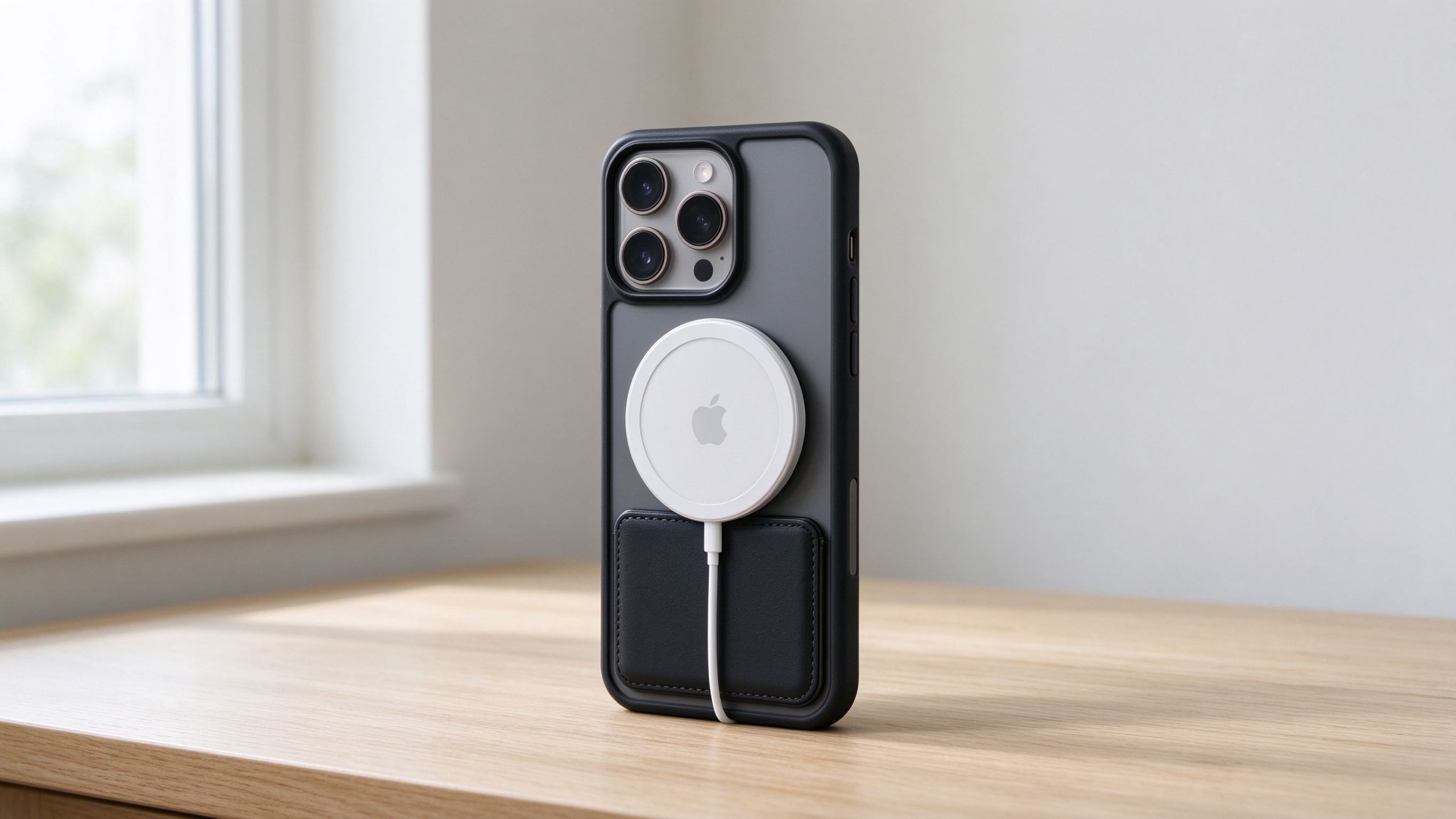
    MagSafe is a ring of magnets built into the back of every iPhone 12 and newer. It lines up with compatible accessories — a charger puck, a wallet, a battery pack — and snaps them into place automatically.

    The idea is simple: instead of fumbling to align a wireless charger or slipping a card into a flimsy slot, things just click. Apple built in a specific magnet arrangement so accessories know exactly where they are, and they charge at full speed instead of the slower wireless charging you get with random Qi pads.

    How Does MagSafe Actually Work?

    Diagram showing MagSafe magnet ring inside an iPhone and how the charger aligns

    Under the glass back of your iPhone, there’s a circular array of magnets arranged in a ring. When you bring a MagSafe charger near, the magnets pull it into perfect alignment — you don’t have to aim it like you do with regular wireless charging.

    That alignment matters because the charging coil inside has to line up with the coil in the phone for full-speed charging. With regular Qi chargers, if you’re off by even a little, you drop to slower speeds. With MagSafe, the magnets guarantee perfect alignment every time, so you get the fastest charging your iPhone supports (up to 15W with Apple’s official charger).

    There’s also a second set of magnets that talks to accessories using NFC, so the phone knows what you attached — whether it’s a wallet, a battery pack, or a charger.

    The Pros: What Makes MagSafe Actually Good

    Charging in the dark without waking up

    This sounds small, but it’s the thing people notice most. Before MagSafe, you’d wake up at 3 a.m. to grab your phone, fumble in the dark trying to find the charging cable, and end up turning on a light just to plug it in. That light kills your sleep rhythm.

    With MagSafe, you just hold the charger puck near the back of the phone and it snaps on. No lights, no fumbling. You can do it half-asleep.

    Your phone stays where you put it

    A lot of people like keeping their phone propped up on the nightstand so they can see notifications without picking it up. Before, it’d slide off or you’d have to prop it against something. With a MagSafe stand, it clicks into place and stays there.

    There’s something weirdly reassuring about being able to glance over and see your screen at night. I know it sounds silly, but it’s the kind of small thing that makes a difference every single day.

    Battery packs that don’t need cables

    This is the sleeper hit. I used to carry a power bank everywhere, and half the time I’d bring it but forget the cable. Useless.

    With a MagSafe battery pack, you just slap it on the back. No cable needed. And if you get a thin one, it doesn’t get in the way when you’re using the phone — you can charge and scroll at the same time without sitting next to a wall outlet.

    If you’re glued to your phone all day (and let’s be real, most of us are), being able to top up wherever you are, without hunting for an outlet, is genuinely useful.

    Wallets and car mounts that just work

    The wallet is basic — it holds 2-3 cards, snaps on the back of your phone. No more digging through pockets.

    But the car mount is where MagSafe really shines. Once you set your mount angle the way you like it, you just snap your phone on every time. No more adjusting it every single drive. You get in the car, it’s there, it’s positioned right. Done.

    The Cons: What Makes MagSafe Frustrating

    It’s expensive

    This is the obvious one. Apple’s own MagSafe charger is $39. A MagSafe case is another $50-60. A wallet is $59. A battery pack is $99. It adds up fast.

    And here’s the thing — you don’t need all of it. The charger alone is fine. But Apple designed it so you’ll want the whole ecosystem.

    Thick or heavy accessories don’t stay on

    Here’s a real problem: if you buy a heavier MagSafe battery pack or a thick wallet, the magnet can struggle. Pick up the phone a certain way, move it around, and it’ll pop off.

    The magnet is strong enough for thin, light accessories. But a bulky 10,000mAh battery pack? It’s not glued on. You’ll feel it shifting. Move your phone a little too fast and it disconnects — charging stops mid-way.

    It gets warm

    Wireless charging generates heat, and MagSafe is no exception. When you’re charging fast, the phone and the puck get noticeably warm. If you’re using the phone while charging (navigation in the car, for example), it’ll get hotter.

    It’s not dangerous — Apple throttles charging if it gets too hot. But it’s slower than plugging in, and you’ll feel it on your hands.

    Quick tip: if you charge near an open window or a fan, the heat dissipates faster and it doesn’t get as hot.

    The accessories lock you into the ecosystem

    This is the Apple tax. If you buy a MagSafe wallet from a third party, it might not snap on as strong. If you want a battery pack that charges at full speed, you’re basically looking at Apple or a handful of certified brands.

    It’s not a dealbreaker, but it’s annoying that a $15 generic wireless charger works with any phone, while MagSafe accessories cost more and don’t play well with non-MagSafe gear.

    Do You Actually Need a MagSafe Case?

    Short answer: no, but it helps.

    If you have an iPhone 12 or newer, the magnets are built into the phone itself. You can use a MagSafe charger with no case at all, or with any thin case.

    But here’s the catch: thick rugged cases (like OtterBox-style) break the magnetic connection. The magnets can’t reach through 3mm of rubber. So if you have a heavy-duty case, you either need to take it off every time you charge, or get a case with built-in MagSafe magnets.

    A MagSafe case adds a thin magnet ring to the case itself, so you keep the strong snap-on feel even with a protective case. It’s not essential, but if you use MagSafe accessories regularly, it makes the experience way better.

    MagSafe vs. Regular Case: What’s the Difference?

    Comparison table of MagSafe case vs regular case across key features

    People ask this all the time. Let’s break it down:

    The tradeoff is simple: MagSafe cases cost a bit more and are slightly thicker, but they unlock the whole accessory ecosystem. If you just want basic protection and don’t care about magnetic accessories, a regular case is fine.

    The Cheap Alternative: You Don’t Have to Buy MagSafe

    Here’s a secret nobody tells you: if you don’t want to spend $50 on a MagSafe case, there’s a cheap workaround.

    You can get silicone suction pads (the kind with those little grippy dots on both sides) and stick one to the back of your phone case. Then you can press your phone onto any smooth surface — a bathroom mirror, kitchen tile, a glass shower door. It holds your phone hands-free while you follow a recipe or take a video call.

    It’s not the same as MagSafe, and it won’t charge your phone. But if you just want to stick your phone on a wall sometimes, it works and costs almost nothing.

    Who Should Skip MagSafe?

    Let’s be real — MagSafe isn’t for everyone.

    Skip it if:

    • You always plug in with a cable and don’t care about wireless charging
    • You use a super thick rugged case and don’t want to switch
    • You hate spending money on Apple accessories
    • You already have a wireless charger that works fine for you

    MagSafe is a convenience upgrade, not a necessity. If you’re happy with how you charge your phone now, there’s no urgent reason to change.

    Who Should Buy Into MagSafe?

    On the other hand, if any of these sound like you, it’s worth it:

    • You hate fumbling with charging cables in the dark
    • You’re always on your phone and need to top up without an outlet
    • You use your phone for navigation in the car
    • You want a simple way to carry 2-3 cards without a wallet
    • You like the idea of snapping your phone on a stand and having it just work

    It’s the small daily conveniences that add up. After a few weeks, you stop noticing the magnets and start noticing how annoying regular charging used to be.

    Our Top Picks: What Actually Works

    I tested a few popular options to see what’s worth buying and what’s not. Here are the honest picks — including the complaints real people have.

    Best Budget MagSafe Case: Spigen Thin Fit MagFit

    Price: $21.99 | Rating: 4.5 stars (3,081 reviews) | ASIN: B0FD29X7T8

    This is the one I’d recommend if you want a thin, basic MagSafe case without spending Apple money. It’s slim, fits well, and adds the magnet ring you need.

    The catch: Some reviewers say the magnetic strength is weaker than Apple’s official case. If you’re using heavy accessories, it might not hold as firmly. Also, a few people said the paint chips after a few months of use.

    Best Case With a Stand: ESR Classic Hybrid with Flex Stand

    Price: $32.99 | Rating: 4.4 stars (37,978 reviews) | ASIN: B0FCY8WNZJ

    ESR has a ton of reviews for a reason — this case comes with a built-in kickstand, which is great for propping your phone up to watch videos.

    The catch: The stand is the weak point. Multiple reviewers said the hinge breaks after 6-8 months of regular use. Also, the clear version yellows after about 6 months, and some people say it’s slippery to hold.

    Best Wallet (If You Don’t Mind the Price): Apple FineWoven Wallet with MagSafe

    Price: $59.00 | Rating: 3.6 stars (449 reviews) | ASIN: B0HJB2PN4W

    Apple’s official wallet snaps on perfectly and works with Find My. It’s the most polished option.

    The catch: The 3.6 star rating says it all. People complain that it gets dirty easily and looks worn fast. The magnet is weak — cards can slip out. And it cracks after 2-6 months. For $59, that’s rough. You’re paying for the Apple logo and Find My integration, not the build quality.

    Best Car Mount: ANDERY Foldable MagSafe Car Mount

    Price: $19.99 | Rating: 4.3 stars (31,113 reviews) | ASIN: B0DN1S1YLV

    This is the best value car mount I found. It’s cheap, it holds your phone securely, and it folds flat when not in use.

    The catch: The adhesive leaves residue on your dashboard in hot weather. On bumpy roads, the phone wobbles a bit. And the plastic hinge can break after a few months.

    Final Verdict: Is MagSafe Worth It?

    Here’s my honest take: MagSafe is worth it if you use even one or two accessories regularly.

    You don’t need the whole ecosystem. Start with a charger and a case. If you find yourself loving the snap-on convenience, add a car mount or a battery pack later.

    It’s not life-changing. It’s not a must-have. But it’s the kind of small daily convenience that makes you wonder how you lived without it after a few weeks.

    If you’re on the fence, buy the cheapest MagSafe case you can find (like the Spigen one above) and try it for a month. If you don’t use the magnets, return it.

    Frequently Asked Questions

    Does MagSafe work through a case?

    Yes, as long as the case is thinner than about 2mm and not metal. Thick rugged cases (over 3mm) will block the magnets. If you have a heavy-duty case, look for one with built-in MagSafe magnets.

    Is MagSafe faster than regular wireless charging?

    Yes. MagSafe charges at faster speeds (up to 15W with Apple’s official charger) because the magnets guarantee perfect coil alignment. Regular Qi charging typically drops to 7.5W or lower if the coils aren’t perfectly aligned.

    Does MagSafe damage the battery?

    No more than any other wireless charging. It generates some heat, which is normal. Apple throttles charging speed if the phone gets too hot to protect the battery.

    Can I use MagSafe with an Android phone?

    No, MagSafe is Apple’s proprietary system built into iPhone 12 and newer. Android phones have wireless charging but not the magnetic alignment system.

    Do I need a special case for MagSafe?

    No. The magnets are built into the phone itself. A thin regular case works fine. But a MagSafe case adds extra magnets for stronger attachment, which is helpful if you use wallets or battery packs.

    How much does MagSafe cost to set up?

    You can get started for $25-40: a third-party MagSafe case ($20-30) and a basic MagSafe charger ($15-20). Apple’s official setup costs more like $100+ for case + charger + wallet.
  • Best Clear iPhone 18 Pro & Pro Max Cases That Don’t Yellow (2026)

    Best Clear iPhone 18 Pro & Pro Max Cases That Don’t Yellow (2026)

    Let me guess why you’re here.

    You just unboxed your new iPhone 18 Pro — maybe it’s that Glacier Blue, maybe the Burgundy. It looks incredible. You want to show it off. So you went and bought a clear case.

    And then two or three months later, it’s yellow.

    Yeah, I’ve been there too. There’s nothing more annoying than dropping $15–50 on a clear case only to watch it slowly turn the color of old butter.

    So I did what any reasonable person would do: I went down the rabbit hole. I compared every popular clear case for the iPhone 18 Pro and 18 Pro Max on the market right now. I looked at what they’re made of, how they handle MagSafe, what real users are complaining about in the Amazon reviews, and most importantly — which ones actually stay clear longer.

    Here’s what I found.

    First: Why Do Clear Cases Even Turn Yellow?

    Before we get into the picks, let’s quickly talk about why this happens — because understanding the “why” helps you choose the right one.

    Clear cases yellow because of something called photo-oxidation. Basically, UV light from the sun + the oils on your skin + the warmth from your pocket or your car dashboard = the plastic starts breaking down chemically. And that chemical breakdown shows up as… well, yellow.

    Here’s the thing though: not all clear cases yellow at the same rate.

    • Cheap all-TPU soft cases (the $8 ones on Amazon): start yellowing in 3–6 months. No way around it.
    • Hybrid cases (hard PC back + TPU bumper): the back panel stays clear for 8–12 months, but the soft edges still yellow.
    • Premium cases with UV-resistant coatings: these can go 18–24 months without noticeable yellowing.

    The key is the back panel material. Hard polycarbonate (PC) or acrylic backs yellow much slower than soft TPU. That’s why every good anti-yellowing clear case uses a hard back + soft bumper design.

    Can you reverse yellowing? Sort of — baking soda and hydrogen peroxide can brighten it up for a week or two, but the damage is already done. Better to just buy one that resists it in the first place.

    Quick Comparison Table

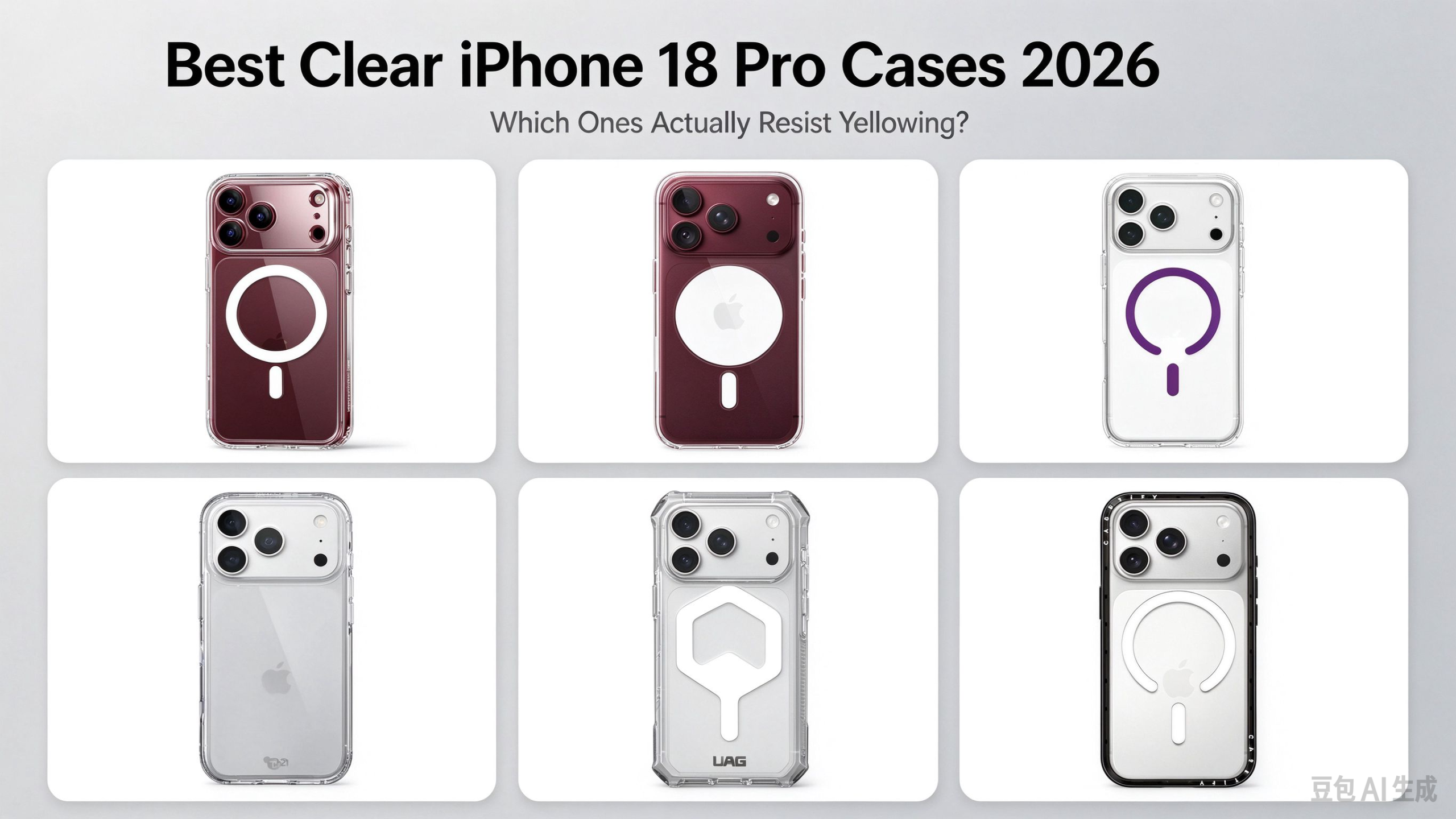
    The 6 Clear Cases I’d Actually Recommend

    1. Spigen Ultra Hybrid MagFit — The Safe Budget Pick

    Price: $16.99 Fits: iPhone 18 Pro / 18 Pro Max

    Let’s start with the obvious one, because it’s the one everyone buys.

    Spigen’s Ultra Hybrid MagFit has hundreds of thousands of ratings on Amazon. It’s the case that people default to when they don’t want to think about it.

    The build is solid: a hard polycarbonate back panel paired with a flexible TPU bumper. The PC back stays clear longer than most budget cases — I’d say you’re looking at 8–10 months before you notice any yellowing on the back. The TPU edges will yellow faster, but that’s true of every case in this price range.

    MagSafe works fine. The magnets align properly with wireless chargers and magnetic wallets — not the strongest I’ve tested, but totally reliable for everyday use.

    The catches:

    • Some users reported receiving the case with visible scratches already on the back panel — seems like a quality control issue rather than a design flaw.
    • A more important one: camera protection is slightly insufficient. Since the 18 Pro and 17 Pro have nearly identical body dimensions, Spigen reused the same mold. But the iPhone 18 Pro’s camera bump is slightly larger, so the raised lip around the camera opening doesn’t quite cover it fully. If you set your phone down camera-side down, there’s a small chance the lens touches the surface.

    Who this is for: If you’re the type of person who changes your case every year anyway, or you just want something reliable and cheap that won’t break the bank — this is your case. Just be aware of the camera lip issue.

    2. ESR Classic Hybrid Magnetic — The One I’d Actually Buy

    Price: $16.99 Fits: iPhone 18 Pro / 18 Pro Max

    Alright, this is the one that impressed me the most when I was doing research.

    ESR is a brand that doesn’t get as much hype as Spigen or OtterBox, but their stuff consistently punches above its weight. The Classic Hybrid Magnetic case for the iPhone 18 series has two things that make it stand out:

    First, the magnets are strong. ESR rates this at 1,500 grams of holding force. For context, Apple’s own MagSafe cases are around 1,000–1,200g. That means if you use a magnetic car mount or a magnetic battery pack, this case won’t slide off halfway through your drive. Weak magnets are the #1 complaint about third-party clear cases, and ESR actually solved it.

    Second, the back panel has an enhanced UV-resistant coating. ESR says it slows yellowing by about 40% compared to their older cases. It’s not magic — the TPU edges will still eventually yellow — but the visible back panel stays clear noticeably longer.

    Oh, and it’s rated for 12-foot drops (3x military grade). For a $17 clear case, that’s absurdly good protection.

    The catches:

    • Some users found that when the phone lays flat on a table, the camera lens still touches the surface — the raised camera lip isn’t quite high enough on this model either.
    • A few people mentioned the case feels slippery in hand — the TPU bumper doesn’t have much texture, so if you have sweaty hands, it might feel a bit slippery.

    Who this is for: Honestly? This is the best all-around pick on this list. Strong magnets, UV-resistant back, great drop protection, and it’s only $17. If you only buy one case, make it this one — just maybe add a lens protector to solve the camera-touching issue.


    3. Apple Clear Case with MagSafe — The “If You Know, You Know” Pick

    Price: $49.00 Fits: iPhone 18 Pro / 18 Pro Max

    Here’s the thing about Apple’s clear case: it’s fine.

    It fits perfectly. The MagSafe click is satisfying. The microfiber interior keeps dust off your phone. The cutouts are precise down to the millimeter. Apple even claims the materials and coatings are “optimized to prevent yellowing over time” — which is more than most brands say.

    But… is it $49 good?

    If you’re asking me, the answer is no, not really. And the Amazon reviews tell the same story.

    The catches:

    • Users consistently complain that it adds noticeable weight to an already heavy Pro Max — you can definitely feel the difference when you pick up the phone.
    • The back surface is slippery — the scratch-resistant coating that Apple applies makes the case feel smooth to the point of being slidey. A few people said it slipped right off their nightstand.
    • And yes — it still yellows. Apple says they optimized it, but it’s still polycarbonate + TPU, and it still ages. Just maybe slightly slower than the budget options.

    The only reason to buy it is if you want that seamless Apple ecosystem experience — the way the MagSafe charger clicks into place, the way the lock screen animation pops up, the way it feels like an extension of the phone itself. That’s a real feeling, and it’s worth something to some people.

    But if your main priority is “stays clear for as long as possible” or “doesn’t add more weight,” you can get that for half the price from ESR.

    Who this is for: Apple stans who want the official experience. People who want the magnetic animation to pop up on their lock screen. Everyone else, save your money.

    4. CASETiFY Compact Clear — The “I Want It To Look Cute” Pick

    Price: $45 (no MagSafe) / $55 (with MagSafe)

    Fits: iPhone 18 Pro only (as of writing)

    CASETiFY occupies a weird space in the clear case world. It’s technically a clear case, but it’s also… not just clear.

    You can get the fully transparent Compact version in two options:

    • Compact Case (No MagSafe) — $45, pure clear, no built-in magnetic ring
    • Compact Case with MagSafe — $55, built-in magnetic ring for MagSafe accessories

    The build quality is solid. The drop protection is rated for 6.6 feet, which is nice.

    But let’s be real about this one, because there are a few catches most people miss:

    The catches:

    • If you buy the no-MagSafe version, a MagSafe charger will still work — but it won’t snap into place. The charger might slide around, and charging speed could be slower because of misalignment. For $45, that’s a pretty big omission.
    • The MagSafe version costs $10 more — whether that’s worth it depends on how often you use magnetic accessories.
    • The reviews count is very low — only about 9 ratings on Amazon. This is a new product for the iPhone 18 line, so there isn’t much long-term feedback yet on yellowing or durability.
    • And of course, the TPU edges will yellow eventually. At $45–55, you’re paying a premium for the brand and the design options, not for any special anti-yellowing tech.

    Who this is for: People who care about aesthetics as much as protection. Anyone who wants a case that doesn’t look like everyone else’s. Just know which version you’re getting — and whether you actually need the MagSafe upgrade.

    5. UAG Plyo — The “I Drop My Phone Constantly” Pick

    Price: $59.95 Fits: iPhone 18 Pro only (as of writing)

    If you’re a serial dropper, this is your case.

    UAG (Urban Armor Gear) is known for making military-tested rugged cases, and the Plyo series brings that energy to a clear design. It’s rated for 16-foot drops — that’s the highest drop protection on this entire list.

    The build is: hard polycarbonate back + TPU shock-absorbing frame + air-soft corners. The PC back panel is naturally UV-resistant (polycarbonate yellows much slower than TPU), so this case actually stays clear for a long time.

    The tradeoff? Bulk. This case is noticeably thicker and heavier than the ESR or Spigen options. If you like that “barely there” feeling, you’ll hate this. But if you’ve shattered two phone screens this year, this bulk is a feature, not a bug.

    The catches:

    • It’s chunky. There’s no way around it — this is a protective case first, a clear case second.
    • As of writing, it’s only available for the iPhone 18 Pro, not the Pro Max. If you have the Pro Max, you’ll need to wait or pick a different option.
    • The Amazon reviews are still very sparse (only 2 ratings so far), since this is a brand-new product for the 18 series.
    • And like all hard clear cases, the PC back will scratch over time.

    Who this is for: Accident-prone people. Outdoor workers. Anyone who’s ever dropped their phone on concrete and held their breath. If protection comes first and clear comes second, this is your pick — as long as you have the Pro, not the Pro Max.

    6. tech21 EvoClear — The “I’m Done With Yellowing” Pick

    Price: $39.99 Fits: iPhone 18 Pro Max only (as of writing)

    tech21 is the only brand on this list that actually warrants against yellowing. If your EvoClear case turns yellow within the first year, they’ll replace it.

    That’s a bold move. And it tells you they’re confident in their materials.

    The EvoClear uses a hard acrylic back panel with a UV-resistant coating, paired with their proprietary FlexShock impact-absorbing TPU frame. It’s rated for 12-foot drops. The build quality is nice, the fit is precise, and the case feels lighter than you’d expect.

    One thing to note: the standard EvoClear doesn’t have built-in MagSafe magnets. If you want MagSafe, you need to step up to the EvoCrystal MagSafe version, which is $49.99 and rated for 16-foot drops.

    The catches:

    • The base version doesn’t have MagSafe magnets built in. You’ll need to pay $10 more for the MagSafe version.
    • As of writing, it’s only available for the iPhone 18 Pro Max, not the standard Pro. If you have the smaller Pro model, you’re out of luck on this one.
    • The Amazon review count is still small (around 10 ratings), since it’s a new product.
    • No major complaints stand out from the early reviewers — the feedback has been fairly positive so far.

    Who this is for: Anyone who’s been burned by yellowing clear cases one too many times and just wants a case that stays clear. The warranty alone makes it worth considering — assuming you have the Pro Max.

    Quick Answers to Your Questions

    Do all clear iPhone 18 Pro cases turn yellow eventually?

    Yes, but the timeline is wildly different. Cheap TPU cases: 3–6 months. Mid-range hybrid cases: 8–12 months. Premium UV-resistant cases: 18–24 months.

    Which clear case material resists yellowing best?

    Hard polycarbonate (PC) or acrylic back panels. TPU (the soft bumper edges) will always yellow faster — it’s chemically unstable under UV light. The best cases use a hard back + soft bumper combo.

    Is the Apple clear case worth $49?

    Only if you want the official MagSafe experience. The main complaints from real users are that it adds noticeable weight and feels slippery in hand. If you just want something that stays clear and protects your phone, the ESR at $17 gives you 90% of the experience for a third of the price.

    Do MagSafe clear cases slow down wireless charging?

    Only if the magnets are weak and cause misalignment. ESR’s 1500g magnets are the strongest we tested, so misalignment is basically a non-issue there. Just note that CASETiFY’s no-MagSafe version doesn’t have built-in magnets at all — a MagSafe charger will still work, but it won’t snap into place.

    How do I slow down yellowing?

    Wipe it down weekly (skin oils speed up yellowing), keep it out of direct sunlight, and don’t leave it on a hot car dashboard. Basic stuff, but it makes a noticeable difference.

    So… Which One Should You Buy?

    Here’s my honest take:

    • Best overall value: ESR Classic Hybrid Magnetic ($17). Strong magnets, UV-resistant back, 12ft drop protection. Can’t beat it.
    • Best budget pick: Spigen Ultra Hybrid MagFit ($17). Reliable and well-known, just watch out for the camera lip issue and occasional QC scratches.
    • Most protective: UAG Plyo ($60). 16ft drop protection, clear PC back, built like a tank — but only for the Pro, not the Pro Max.
    • Best anti-yellowing warranty: tech21 EvoClear ($40). They’ll replace it if it yellows — but only for the Pro Max.
    • Official Apple experience: Apple Clear Case with MagSafe ($49). You know what you’re getting — perfect fit, but heavier and slipperier than you’d expect.
    • Best design / style: CASETiFY Compact Clear ($45–55). Cute design, but watch which version you’re getting — the $45 one doesn’t have MagSafe.

    No clear case stays crystal clear forever. But pick the right one, and you’ll be showing off your iPhone 18 Pro’s color for well over a year — not just a few months.


    Disclosure: As an Amazon Associate, I earn from qualifying purchases. This doesn’t affect my recommendations — I only include cases I actually think are worth your money.